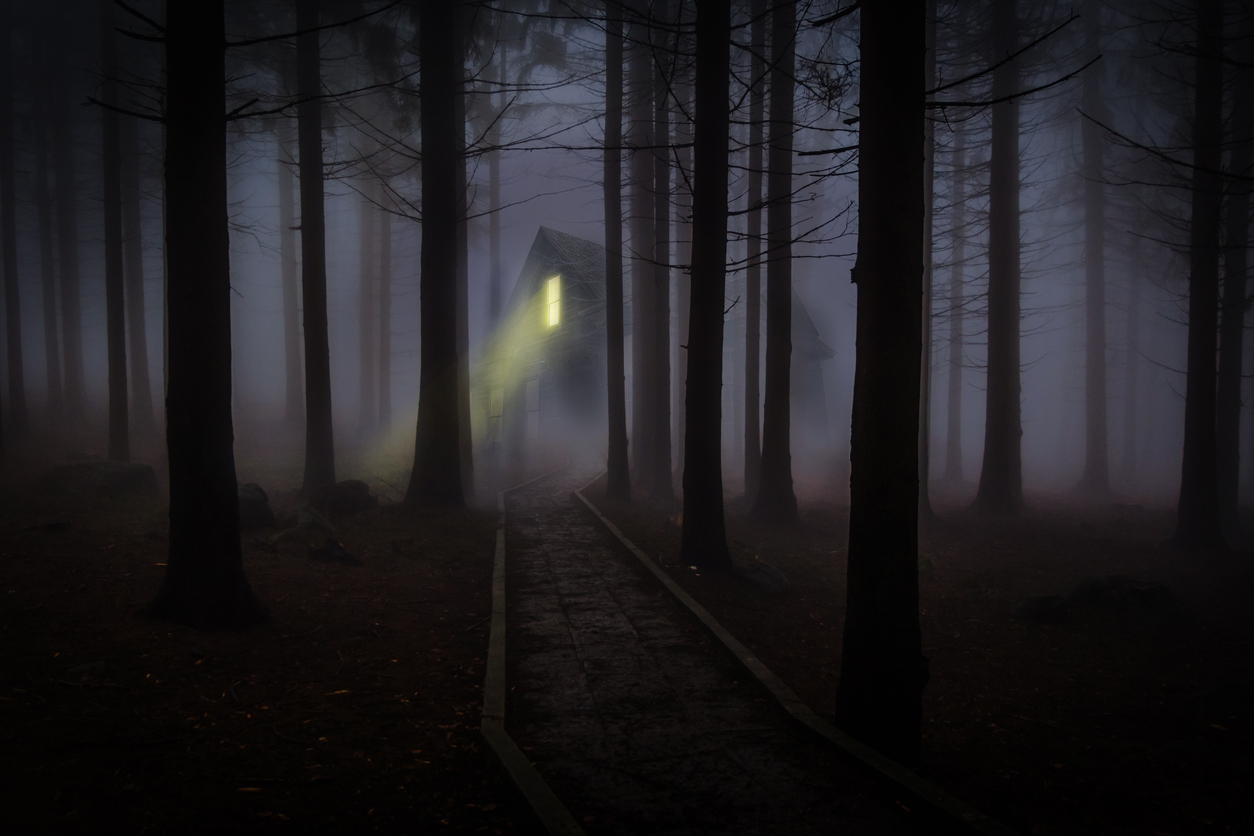
I grew up in the woods. Once I discovered horror movies (Freddy, Jason, Chucky), walking outside after dark set my heart pounding. I was sure that whatever waited past the porch light wouldn’t just kill me. It would take its time with a blade, a chainsaw, or an ax.
I learned early that “out there” was terrifying. It’s where our imagination runs wild and convinces us to stay inside, where it’s safe. Or where we think it’s safe.
Which brings me to last week. I’d just delivered my Bet on You keynote to a terrific group of banking professionals. Afterward I signed books. That’s my favorite part, because I get to hear what resonated and what people plan to do about it. This time I heard the same sentence again and again:
“I just need to put myself ‘out there’ more.”
Their “out there” wasn’t a cornfield in a creepy town. It meant showing up as themselves, around other people, where the danger wasn’t death. It was something that can feel worse: rejection.
- Talking to strangers at a conference to build business relationships
- Dating again after being ghosted or divorced
- Asking for a new role after being passed over for the last promotion
I understand why these feel scary. We fear loss, rejection, and embarrassment. But compared to what? Staying inside means missing the campfires, the flashlight tag, and the nights under the stars. “Out there” is where everything we want happens.
Besides, plenty of frightening things happen when we’re safe inside. Remember When a Stranger Calls? The calls were coming from inside the house. We all get that call. It’s the voice whispering “Who do you think you are?” “They’ll never say yes.” “You’ll embarrass yourself.” Sometimes that voice — YOUR VOICE — does more damage than any masked killer ever could.
So here’s the first rule of horror movies: don’t answer the call coming from inside the house. The second rule: the scary only stops when you confront it.
In the Marines, I learned that everyone feels fear. It’s natural. We’re born with only two fears: falling and loud noises. Everything else is learned, whether from movies, from experience, or from someone else’s warning. Think about your biggest fear. I’d bet there’s an origin story behind it.
Your fears are valid, but sometimes they’re overblown. Confront them so you know what you’re really up against:
- Name it. Get specific. “I’m scared” is a shadow in the woods. “I’m afraid the client will say no” is something you can see and deal with. Fear shrinks when you turn the lights on.
- Claim it. Own it. You learned this fear somewhere, so you get to decide how much power it has. It’s not your boss, your ex, or the market. It’s yours to manage.
- Befriend it. Fear usually shows up at the edge of growth. Treat it as a sign you’re headed somewhere worth going. Let it ride along, but don’t hand it the keys.
Then be scared, and do it anyway. Go on, get “out there.”